Cost calculation for imports


Are you planning to import products? If so, you will need to set a retail price for your product. A cost price calculation will help you do this. Find out what you need to bear in mind when calculating the cost price.
Why calculate costs?
If you want to start selling imported products, you must first determine the selling price. You agree the price of a product with buyers in advance. So you need to know what other costs you will have to import the product. For example, for storage in a warehouse or for transport insurance. By calculating the cost price, you will know what costs you are incurring. You can then set a price that covers all your costs. And you will know what you need to charge to make a profit.
Calculating a cost price
A cost price consists of direct and indirect costs. Direct costs are costs directly associated with the product, for example:
- the purchase price
- transportation costs
- import duties
Indirect costs include your fixed operating costs, such as:
- marketing budget
- travel expenses
- personnel costs
Adding all these costs together gets you your total cost price.
Calculating import costs
Import costs differ per country and per product. The import duties for products made in Indonesia, for example, are often lower than those for products made in China. You may also have to pay inspection costs if you want to sell products in the European Union (EU) that must meet extra safety requirements.
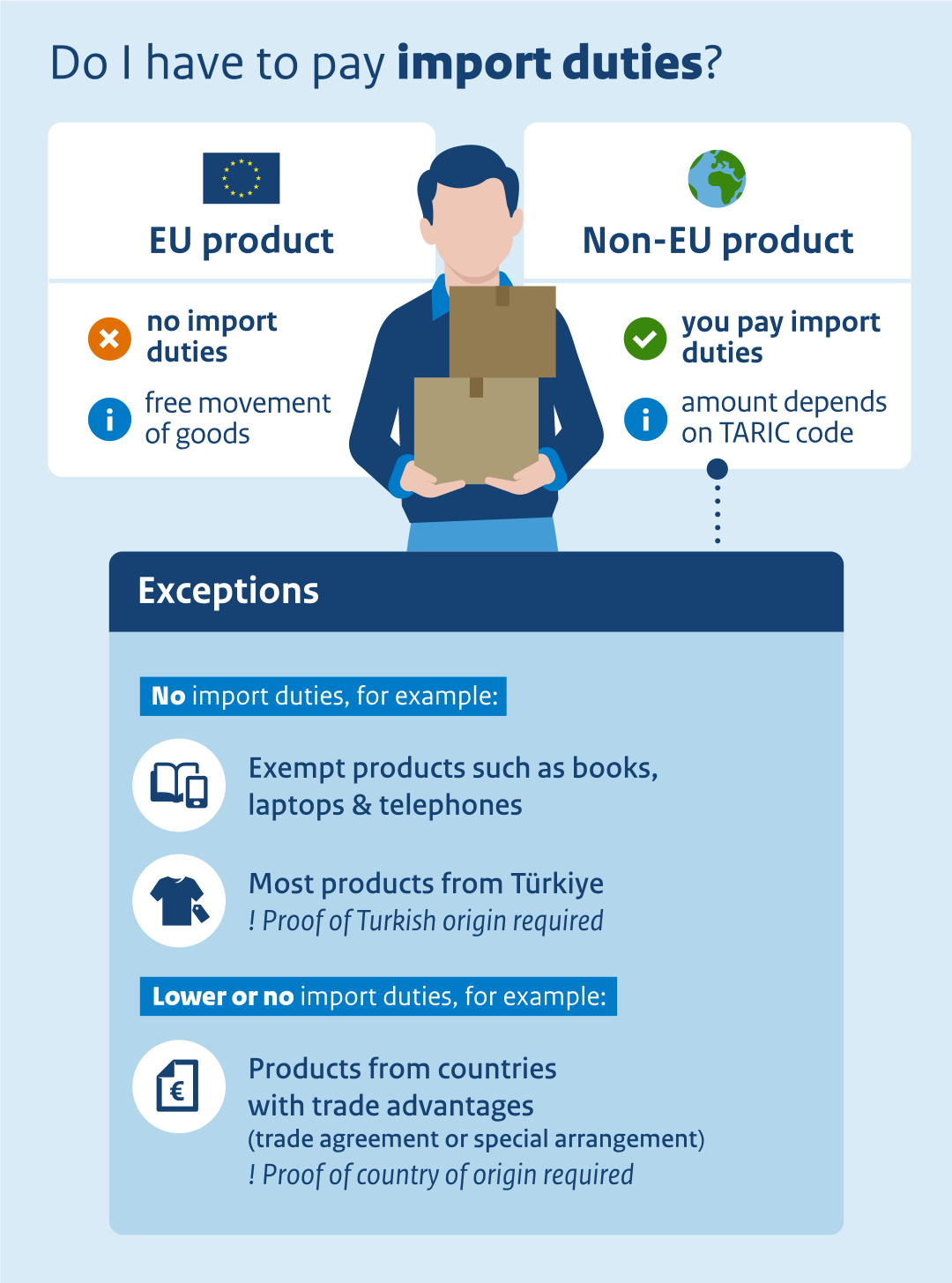
Do I have to pay import duties?
Does the product come from the EU? Then you do not pay import duties. There is free movement of goods in the EU.
Does the product come from outside the EU? Then the main rule is that you do pay import duties. The amount depends on the product's TARIC code.
However, there are exceptions to this main rule. These are a few of the exceptions: You do not pay import duties for exempt products, such as books, laptops, and phones. Also, most products from Türkiye are exempt from import duties. You will then need proof of Turkish origin.
You also pay fewer or no import duties for products from countries with a trade advantage. A trade advantage may come from a trade agreement or a special arrangement. You will then need proof of country of origin.
Costing example
Suppose you buy 500 laptop sleeves from China every 2 months. What are your costs and what price should you set in order to turn a profit?
| Direct costing | |
|---|---|
| Purchase 500 laptop sleeves in China at € 20 |
€ 10,000 |
| Marine transport cost |
€ 1,000 |
| Insurance cost |
€ 150 |
| Customs value |
€ 11,150 |
| Import duty 2.7% |
€ 301.05 |
| Purchase value |
€ 11,451.05 |
| Purchase costs per sleeve (€ 11,451.05/500) |
€ 22.90 |
| Sales price per sleeve |
€ 42.60 |
| Profit per sleeve |
€ 19.70 |
| Total gross profit (500 sleeves at € 19.70) |
€ 9,850 |
Also include indirect costs
This example does not factor in fixed annual operating costs. Such as storage space rental, car costs, phone costs, business insurance, gas, water, and electricity, salaries, and interest payments. All figures are exclusive of VAT.
At 3,000 laptop sleeves sold every year, your indirect costs would be as follows:
Fixed costs per year €61,800. Indirect costs per sleeve €61,800 / 3,000 = €20.60
| Total costing | |
|---|---|
| Purchase costs per sleeve |
€ 22.90 |
| Indirect costs per sleeve |
€ 20.60 |
| Total costs per sleeve |
€ 43.50 |
| Profit margin per sleeve |
€ 19.70 |
| Sales price per sleeve |
€ 63.20 |
An appropriate selling price covers all costs: direct and indirect.