Checklist: Starting to import into the Netherlands


Are you planning to import goods into the Netherlands? If so, there is a lot to consider. For example, how do you find reliable partners abroad? How do you arrange international transport? And what laws and regulations apply?
Existing business? Write a growth plan
Is importing products an expansion to your existing business? In that case, you will need time to find the best product and supplier. Have you thought of who will do your normal work while you spend time on this? Or maybe you need extra financing. Writing a growth plan can help you realise your ambitions. Watch our video 'Writing a growth plan' for tips.
By conducting market research, you can find out whether the Dutch market is suitable for your product. Market research will clarify why the product is not yet available here, as well as who your competitors and target audience are. Read the tips on conducting market research at kvk.nl.
An import plan helps you determine whether your business is ready to start importing, and outlines the steps you need to take to get started. It also highlights the opportunities and risks involved. You can find a template for an import plan on kvk.nl that you can fill in yourself.
The products you import must meet the European requirements for product safety. And you will have to comply with several laws and rules when you start importing. For example:
Check importing rules with the KVK Import Tool
Are you starting to import into the Netherlands? The KVK Import Tool allows you to check the import rules for over 50 consumer products. For example, what product requirements there are, which documents you need, and how much import duties you have to pay.
Find out in which situations you have to pay import duties and file a Customs declaration:
You do not have to file a Customs declaration if you buy products inside the European Union (EU). Nor do you pay import duties. You usually do have to pay VAT in the Netherlands. For some products, you also pay excise duty, consumption tax, or other levies.
Do you import products from a country outside the EU? Then you have to file a Customs declaration and usually pay import duties. You also pay VAT. For some products, you pay excise duty, consumption tax, or other levies.
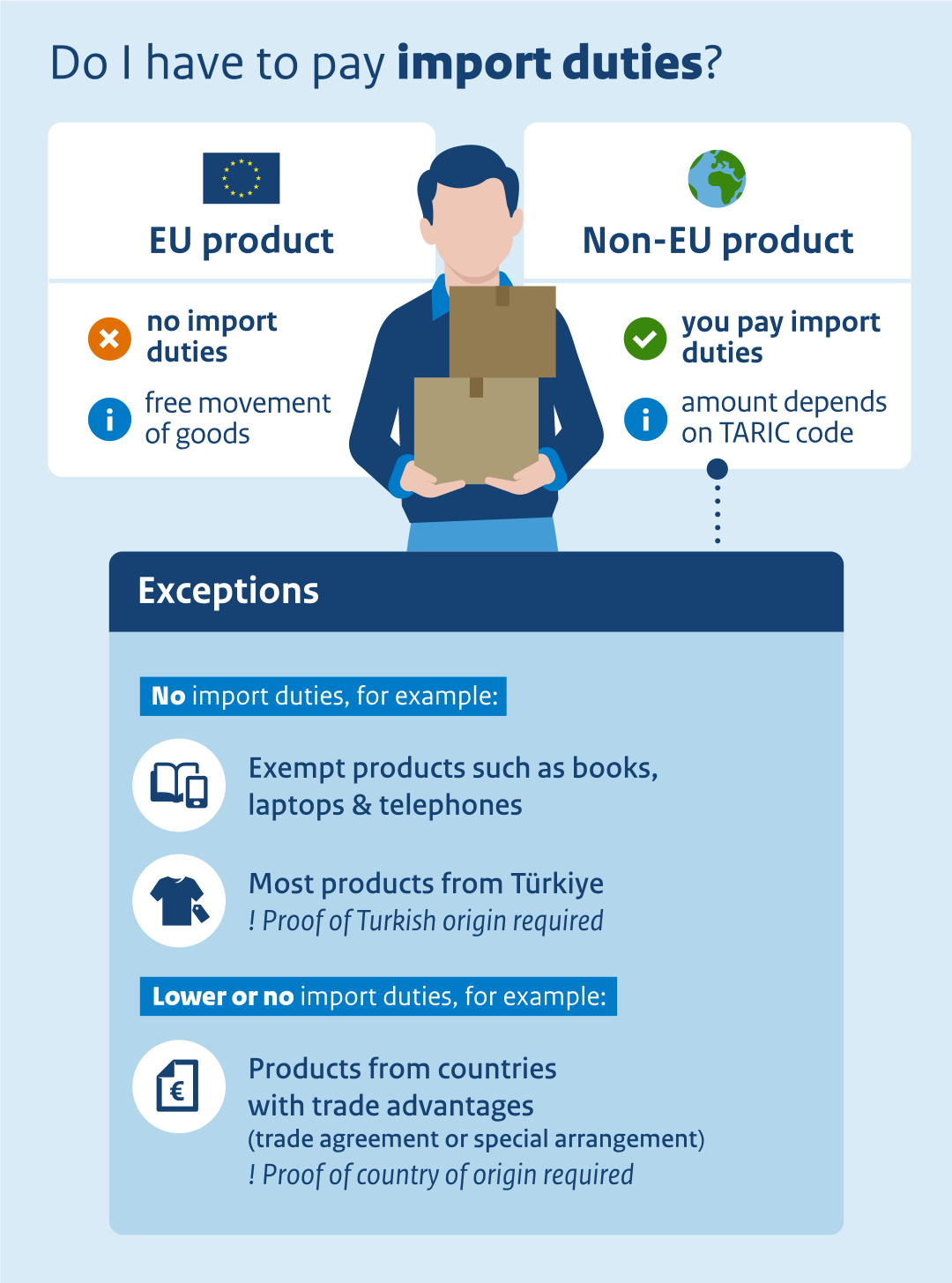
Do I have to pay import duties?
Does the product come from the EU? Then you do not pay import duties. There is free movement of goods in the EU.
Does the product come from outside the EU? Then the main rule is that you do pay import duties. The amount depends on the product's TARIC code.
However, there are exceptions to this main rule. These are a few of the exceptions: You do not pay import duties for exempt products, such as books, laptops, and phones. Also, most products from Türkiye are exempt from import duties. You will then need proof of Turkish origin.
You also pay fewer or no import duties for products from countries with a trade advantage. A trade advantage may come from a trade agreement or a special arrangement. You will then need proof of country of origin.
Importing services
Do you import services? Read more about importing services from inside the EU or importing services from outside the EU.
There are different ways of finding a supplier abroad, a manufacturer or a wholesaler. Dutch embassies abroad can help you. For example, if you need help finding suppliers of end products or raw materials. Foreign embassies in the Netherlands can help you as well. Or go to a trade fair to meet suppliers.
Are you looking for a business partner? Gather information about possible business partners and their products.
For example:
- product documentation
- sales conditions
- how many products the supplier can produce (production capacity)
- delivery times and conditions
- the type of business and its size
Also check the reliability of the supplier. Read how to vet a foreign business partner on the KVK website.
There are laws and regulations for responsible business conduct. corporate social responsibility. This means that you must take into account the impact your business has on people, animals, the environment, and society. Do not just focus on price, quality, and delivery times. Consider social and environmental aspects as well. Follow the step-by-step plan for IRBC to minimise risks within your business and international supply chain as much as possible.
In the Keurmerkenwijzer (Quality Mark Guide, in Dutch), you will find quality marks, symbols, and logos that provide information about products. A quality mark demonstrates that your product or service meets certain quality standards.
Make clear agreements with your foreign supplier. For example on product liability, guarantee, and whose national laws apply to the relationship. And the transport: you can use the ICC Incoterms for this. These are international standard terms of delivery. Put all your agreements in a contract.
To determine the asking price for your product, you need to know what costs you have incurred and what costs you still need to incur. For example, costs for storage and transport. Read more about calculating the cost price for imports.
When it comes to the international transport of your products, you can choose from a range of transport options. The most suitable option depends, for example, on the type of product. You can arrange the transport yourself or have it arranged by a freight forwarder. You should also consider taking out cargo insurance.
Find import tariffs per country and product
This article only lists the various rules and regulations concerning imports into the Netherlands. If you want to find out which tariffs apply to a specific product from a specific country, use the EU Trade Assistant on the Access2Markets website.