Step-by-step plan: Employing temporary staff


Are you hiring temporary staff? Then you must offer the same terms and conditions of employment as you do to your permanent staff. Are you hiring someone through an agency? If so, make sure you carry out the Waadi check. Extra rules apply when you hire staff from outside the Netherlands.
If you hire staff through an intermediary (such as a payroll company, or a temporary employment or secondment agency), you must check whether the intermediary complies with the Workers Allocation by Intermediaries Act, Waadi. This Act combats the exploitation of workers and fraud.
It means you must check (in Dutch) that the business from which you are hiring staff is registered in the Business Register as a supplier of temporary staff.
You must verify the identity of new employees. You need to know who the applicant is and whether that person is authorised to work for you. You do this by asking to see a valid form of identification. This is also required if you hire staff through an agency, or if you engage staff to work for you via a contractor or subcontractor.
Are you hiring someone for a position in which reliability (integrity) is important? Then you can screen the applicant. Screening allows you to assess whether someone is reliable. This helps you limit risks. You can also screen temporary employees.
The Netherlands Tax Administration (Belastingdienst) may hold you liable for the payroll tax and turnover tax that your intermediary, such as a temporary employment or secondment agency, should pay. Does the intermediary not pay payroll taxes? Then the Tax Administration will send you a letter with an assessment (beschikking). One way of preventing liability for payroll tax and turnover tax is to ask the intermediary to set up a so-called G account.
Use an SNA-certified intermediary
By doing business with an SNA-certified company you run less risk of claims from the Tax Administration if this company fails to meet its obligations.
As an employer, you must provide a healthy and safe workplace for all personnel, including temporary employees hired through an intermediary. The Working Hours Act states the number of hours that your employees are permitted to work each day and each week and when they are entitled to breaks.
New rules on reporting accidents in 2027
In July 2027, new rules on reporting workplace accidents are likely to come into force for intermediaries, such as payroll companies, temporary employment agencies, or secondment agencies. Has a serious or fatal workplace accident involving a temporary worker occurred?
- Then you must report the accident to the Netherlands Labour Authority and immediately to the temporary employment agency.
- The temporary employment agency will also report the accident to the Netherlands Labour Authority.
- The temporary employment agency will check whether you have taken sufficient measures to ensure safe working conditions. This is known as the duty of care.
The proposal is still being debated in the Lower and Upper Houses of Parliament.
Do you hire employees through an agency or payroll company? Then you must inform that company about the terms of employment you offer your employees. Payroll workers receive at least the same terms of employment as staff employed by you.
Every worker has the right to the statutory minimum wage plus the standard holiday allowance. Temporary workers are covered by the Collective Labour Agreement (CAO) for temporary workers in which wages are regulated. If you hire temporary workers you are responsible for them receiving at least the statutory minimum wage.
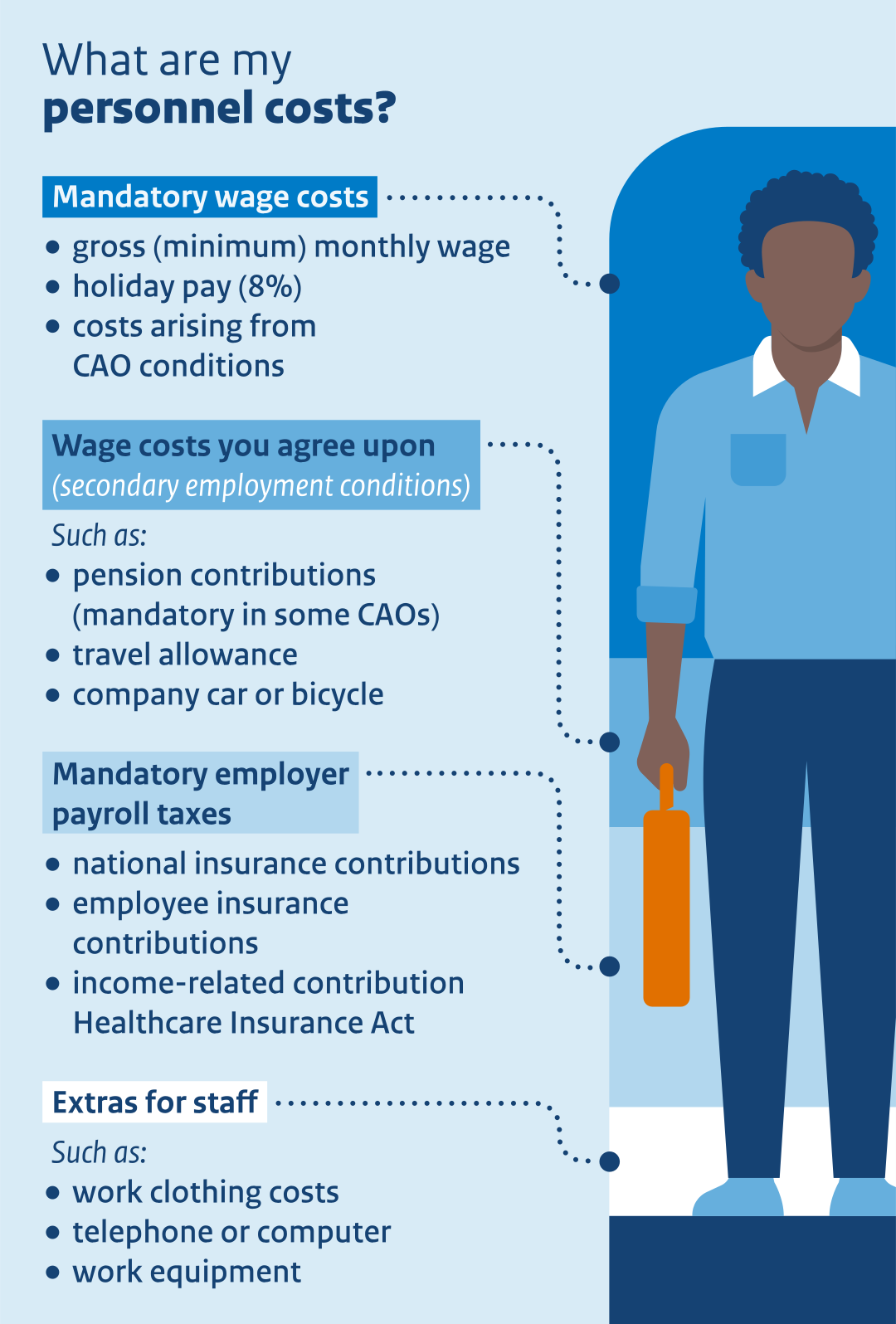
What are my personnel costs?
The infographic shows four categories of personnel costs.
- Mandatory wage costs:
- the gross (minimum) monthly wage
- holiday pay of 8%
- costs arising from collective labour agreements (CAO)
- Wage costs that you agree upon (secondary employment conditions), for example:
- a company car or bicycle
- travel allowance
- pension contributions (sometimes mandatory under the CAO)
- Mandatory payroll taxes for the employer:
- national insurance contributions
- employee insurance contributions
- income-related contribution under the Healthcare Insurance Act
- Extra personnel costs, for example:
- the costs of work clothing
- telephone or computer
- work equipment
You are obliged to recruit staff first in the Netherlands, the European Economic Area (EEA) and Switzerland. You are only allowed to look for staff in other countries if you can not find suitable staff in these countries. If you hire someone from outside the EEA and Switzerland, you must check whether this person has a work permit (TWV). The intermediary must apply for this permit.
Read more about employing foreign personnel.
Do you arrange accommodation for your foreign staff? Then you may not deduct the cost of this accommodation from the minimum wage.
Hiring refugees from Ukraine
Refugees from Ukraine can work in the Netherlands without a work permit (TWV) under the EU's Temporary Protection Directive. You must notify UWV 2 days in advance (in Dutch). Refugees from Ukraine must have a sticker or O-document as proof of residency in the Netherlands from IND to be eligible for this work permit exemption. This exemption does not apply to persons with a temporary residence permit for Ukraine.
More information about the rights of refugees from Ukraine in the Netherlands.